Agroverse
Agroverse is a TrueSight DAO initiative. TrueSight DAO is founded with the purpose of building a better world based on verifiable truth. Our core values are mindfulness, compassion and equanimity.
Overview
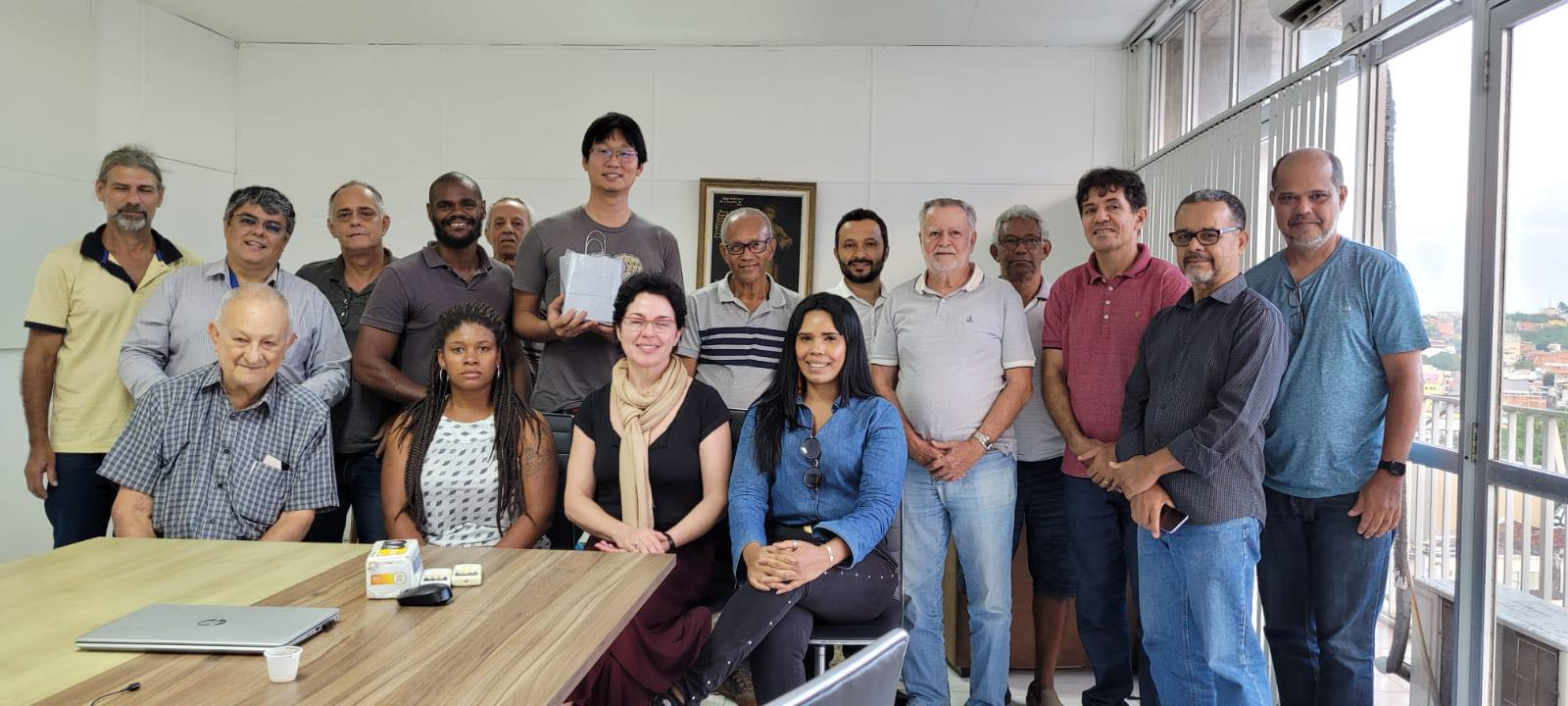
Agroverse connects US consumers with small-scale cacao farmers in the Amazon rainforest who use agroforestry to restore the ecosystem. We aim to make food production more sustainable and equitable by working with these communities. Our goal is to support small scale farmers, restore the Amazon, and bring healthy food to US consumers - one cacao at a time.
Problem statement
In the Amazon, a tale of two worlds unfolds. Cattle ranching and soybean cultivation drive deforestation, while small-scale cacao farmers cling to traditional agroforestry techniques.
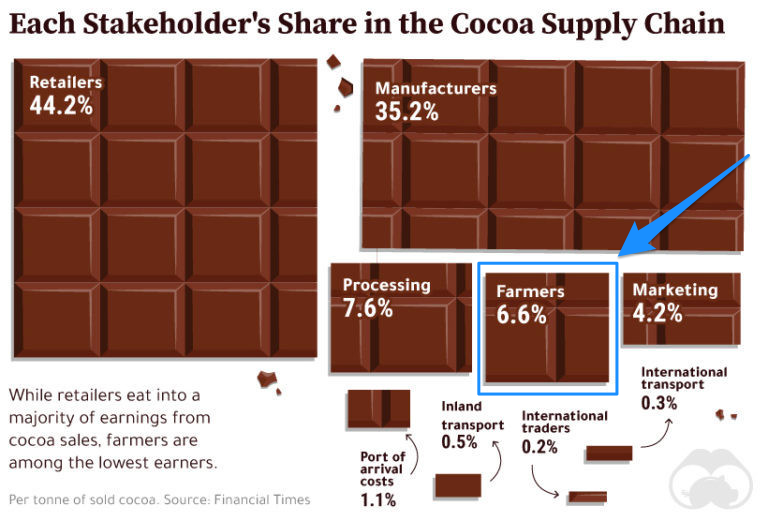
These farmers face significant challenges: accessing markets, securing fair prices, and overcoming geographical isolation. Middlemen, operating in an oligopolistic market, exploit this vulnerability, claiming up to 94% of the profits from cacao sales. This leaves small-scale farmers with a mere 6% of the profits from their own crops, perpetuating a cycle of poverty and deforestation.
The lure of more lucrative crops, driven by Chinese demand for beef and soybeans, tempts farmers to abandon agroforestry and clear their land for cattle grazing and soybean production. China's growing middle class has created a surge in demand for these commodities, making them more profitable than cacao. This economic pressure fuels deforestation, threatening the Amazon's existence and highlighting the need for economic realignment to prioritize environmental stewardship and the well-being of small-scale farmers.

Currently, the chocolate industry follows a lengthy and environmentally harmful supply chain. Cacao beans are harvested in the Amazon rainforest, then transported to Europe by oligopolistic middlemen who control the market and exploit small-scale farmers.
These middlemen ship the cacao beans to Europe for processing and manufacturing into chocolate products. Then, they ship the end products to the USA for retail sale. This complex supply chain results in excessive transportation costs, contributing to the industry's substantial carbon footprint and exacerbating climate change.
The unnecessary leg between Europe and the USA solely adds to the environmental impact, with more greenhouse gas emissions and resource consumption. This highlights the need for a more sustainable and equitable supply chain that benefits both farmers and consumers.

In the United States, a stark reality lies beneath the chocolate industry's glossy exterior. The chocolate that fills American stores and pantries is often overloaded with sugar, compromising its nutritional value and contributing to the nation's obesity epidemic and related health issues.
This is a direct result of oligopolistic middlemen subsidizing the additional transportation costs of shipping cacao beans to Europe for processing and then to the USA for sale. They achieve this by adding more sugar to the chocolate, increasing profits at the expense of consumer well-being.
Despite the potential for high-quality cacao production - a superfood with numerous health benefits - the supply chain prioritizes profits over people, perpetuating a cycle of unhealthy choices that exacerbates the national health crisis.
It's time to transform the chocolate supply chain, ensuring equitable access to quality chocolate that prioritizes health, sustainability, and ethical practices for both consumers and producers.
Solution overview
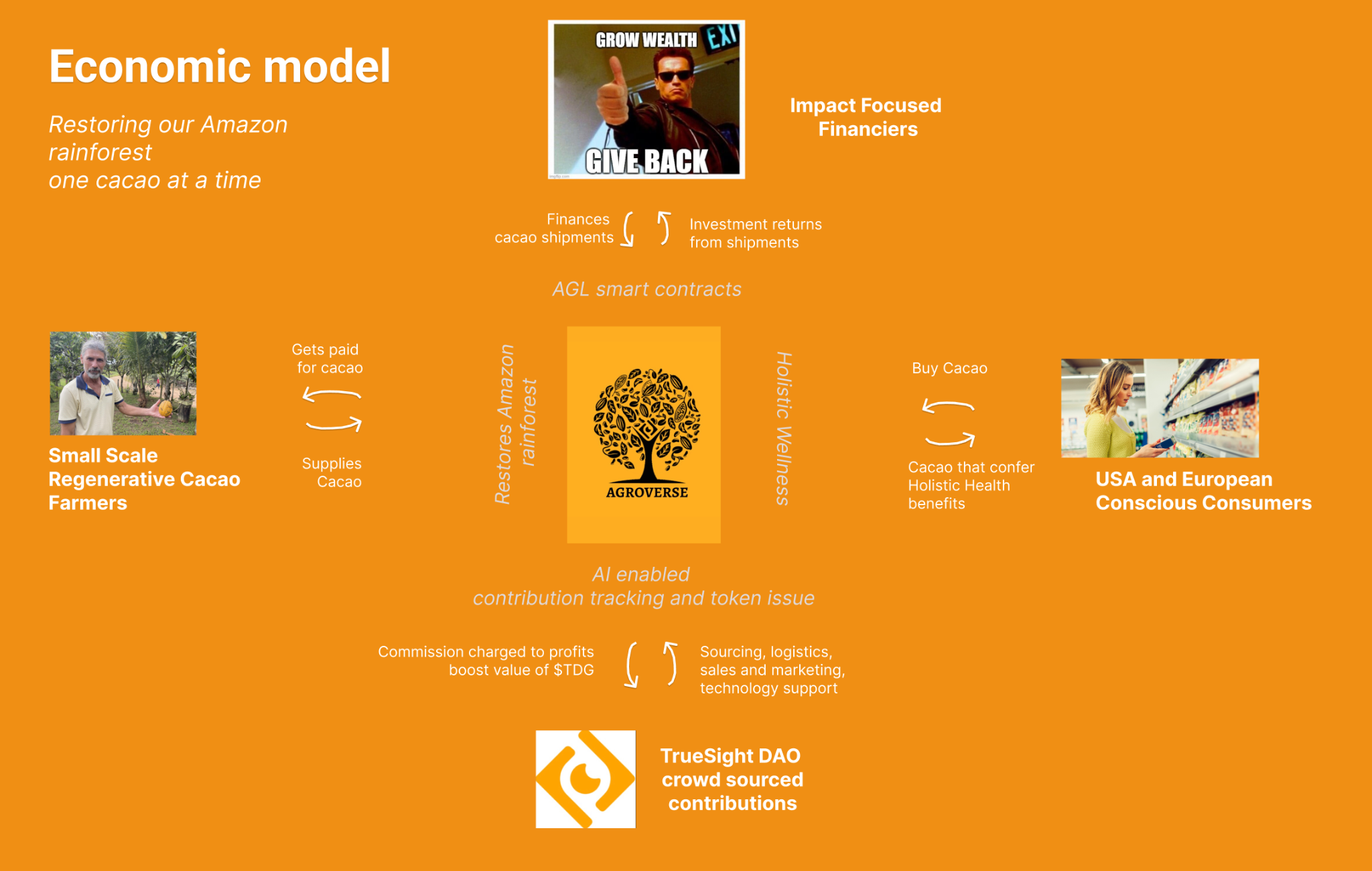
At Agroverse, we're making a difference in the chocolate industry by supporting sustainable practices. We work with small-scale cacao farmers in the Amazon rainforest who use regenerative farming methods and their local manufacturing partners to produce high-quality chocolate.
We've streamlined the supply chain by removing the unnecessary European leg, which not only reduces transportation costs but also helps combat climate change. Instead, we pre-purchase organic cacao products directly from farmers and their local manufacturing partners at a fair price, and sell them directly to consumers in the USA at a competitive price point.
By cutting out middlemen and unnecessary steps, we're creating a more transparent and equitable supply chain. Our approach supports farmers, local industries, and the environment, making a positive impact on the agricultural landscape. And for USA consumers, the end result is a healthier, high-quality chocolate option that's not only delicious but also sustainably sourced.
Gas Fee
The Gas Fee is a transaction fee charged by TrueSight DAO for facilitating the buy and sell of cacao on the Agroverse network.
The Gas Fee is mathematically calculated.
Tokenomics
Our tokenomics system is thoughtfully crafted to support organic agricultural shipments and financing through a series of integrated components:
In summary, Agroverse's tokenomics system fosters engagement, long term sustainability, and active governance participation. The TrueSight DAO framework ensures fairness and transparency, while the two-tier DeFi model maximizes benefits for all participants.
Roles and responsibilities
Operations of our transparent direct to consumer agricultural produce distribution network relies on the following categories of contributors who inputs time, effort and money in exchange for profit and governance tokens.
Role 0: Financiers
Financiers play a crucial role in supporting small-scale farmers by providing essential financing for various aspects of the agricultural supply chain. Their contributions cover the cost of goods, freighting and packaging materials, as well as mailing and fulfillment costs.
Profits and Options:
Upon the successful sale of the entire shipment, Financing Contributors become eligible to receive their share of the total profits, which includes their initial capital injection and the net profit generated from the sale.
Flexible Options:
There are two options available for Financing Contributors:
Option 1 - Hold for Profits:
Financing Contributors may choose to hold their investment position until the entire batch of inventory is sold. At this point, they will receive the total profit (less the DAO gas fee) directly deposited into their wallet, providing a return on their investment.
Option 2 - Exchange for Inventory:
Alternatively, Financing Contributors have the option to exchange their investment for the physical units of inventory that their contribution represents. These units will be shipped to their designated address. Please note that the contributor is responsible for covering shipping costs and the DAO standard rate markup on the cost of goods.
These flexible options allow Financing Contributors to actively participate in the agricultural supply chain while providing essential support to farmers and benefiting from their financial contribution when the shipment reaches its target.
Operational Guild Roles
Role 1: Guild Master
The Guild Master plays a vital role in our project's success. Their primary responsibilities include recruiting members to fill critical roles aligned with the current phase of the project. They are also tasked with the challenging duty of removing existing guild members who cannot effectively self-actualize within the project's scope.
The Guild Master's role is instrumental in ensuring that our team remains dynamic, adaptable, and focused on achieving our project's objectives. By strategically managing team composition, they help maintain a cohesive and productive working environment.
In recognition of their pivotal role, the Guild Master receives governance tokens based on our established rubric.
Role 2: Sourcing Contributors
Contributors will source agricultural produce from small scale farmers. Each contributor will be responsible for identifying and building relationships with farmers, getting price quotations. For their efforts they will be awarded governance tokens based on our rubric.
Role 3: Product Development Contributors
Product Development contributors play a pivotal role in shaping the product strategy and market presence of Agroverse. They are responsible for conducting market research to identify new product opportunities, determining optimal pricing strategies, defining target market segments, and designing effective product packaging. Additionally, they craft compelling brand stories that resonate with customers and effectively communicate Agroverse's mission and values. These contributors are instrumental in driving product innovation and market growth. In recognition of their valuable contributions, marketing contributors are awarded governance tokens based on our rubric.
Role 4: Compliance and Legal Contributors
Compliance and legal contributors are integral to ensuring the seamless flow of agricultural produce within our network. They play a pivotal role in researching and executing the essential legal procedures associated with both the export and import of agricultural goods. These contributors are dedicated to guaranteeing strict adherence to regulatory requirements, thus maintaining a fully compliant supply chain.
With their expertise in legal matters and regulatory compliance, compliance and legal contributors contribute significantly to managing sales contracts and maintaining stringent quality control. Their prior experience and relevant certifications in legal and compliance matters make them invaluable assets to our operation.
In recognition of their diligent efforts, compliance and legal contributors are rewarded with governance tokens based on our established rubric.
Role 5: Marketing and Promotion Contributors
Our Marketing and Promotion Strategists are pivotal in expanding our market reach. They focus on building strong relationships with distributors and resellers, cultivating key partnerships, and conducting impactful pop-up store events.
These contributors ensure our products are readily available in various retail outlets by managing relationships with distributors and resellers. Their efforts significantly contribute to the growth of our brand and customer base.
Moreover, they excel in managing influencer partnerships, leveraging social media influencers to promote our products and engage with a wider audience.
In recognition of their valuable contributions, Marketing and Promotion Strategists are rewarded with governance tokens based on our established rubric.
Role 6: Supply Chain Contributors
Supply chain contributors are responsible for efficiently managing the movement, storage, packaging, and shipping of agricultural produce within our distribution network. They play a crucial role in coordinating the flow of goods from farmers to buyers, ensuring timely delivery and storage of packaged inventory. In recognition of their contributions, supply chain contributors are awarded governance tokens based on our rubric.
Role 7: Financial Management and Bookkeeping Contributors
Financial management and bookkeeping contributors are responsible for the financial aspects of the network. They manage budgets, monitor cash flow, and ensure compliance with financial regulations. These contributors play a crucial role in maintaining accurate financial records, including profit and cost allocation. In recognition of their efforts, financial management and bookkeeping contributors are awarded governance tokens based on our rubric.
Role 8: Technical Support Contributors
Technical support contributors play a crucial role in assisting customers who encounter issues with their deliveries or products. They provide support through tutorials and FAQs to help users navigate and resolve problems effectively. Additionally, these contributors are responsible for responding to incoming customer inquiries and providing timely assistance. In recognition of their dedication to ensuring a positive user experience, technical support contributors are awarded governance tokens based on our rubric.
Operating process
This section describes how we systematically expand the network of small scale farmers we seek to support. At the core of our effort is the setting up of supply chains from the cooperatives they are part of to the end consumer market.
Supply chain definition
These are the parameters that define a supply chain that flows through our network
Step 1: Focus Group Testing
Step 2: Feedback Analysis
Step 3: Initial Order and Shipping
Step 4: Inventory Management
Step 5: Iteration and Improvement
Continuously gather feedback from customers and iterate on the product to improve its market fit and competitiveness.
Other agroforestry produce options
Our small-scale farmers practicing agroforestry in the Amazon don't just cultivate cacao - they also grow a diverse range of fruit trees. As we expand our network to include more farming clusters, our goal is to identify the top 10 high-value agricultural products from each cluster with the greatest export potential and bring them into the US market through our distribution network. By doing so, we aim to create new economic opportunities for farmers, encourage biodiversity, and offer a wider range of organic options to US consumers.
1. Açaí berries
2. Guava
3. Passionfruit
4. Mangoes
5. Papayas
6. Pineapples
7. Cupuaçu
8. Camu camu
9. Brazil nuts
10. Coconut
11. Graviola (also known as soursop)
12. Guarana
13. Lucuma
14. Murici (also known as "ice cream bean")
15. Physalis (also known as "ground cherries")
16. Pitahaya (also known as dragon fruit)
17. Tamarillo
18. Yacon
Flow of funds
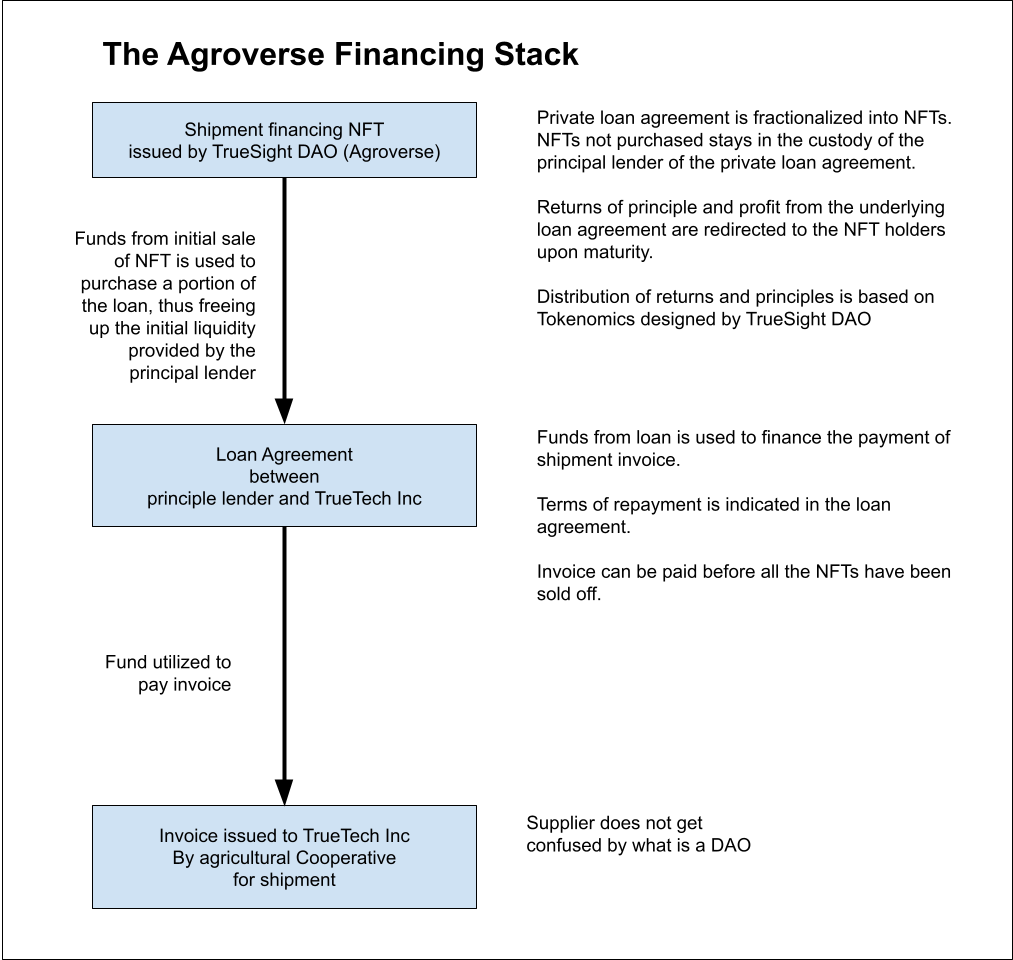
Raising of financing capital via TrueSight DAO
TrueSight DAO will issue shipment financing NFTs, and the funds raised from minting these NFTs by financing contributors will be directed to a wallet controlled by our DAO. These funds will be used to provide liquidity to finance shipments from the source to the USA via our supply chain.
Injection of financing capital from TrueSight DAO to TrueTech Inc
TrueSight DAO transfers these funds off chain and provides them as a loan to TrueTech Inc for shipment financing. Upon completion of the transaction, the loan amount and the interest payment is returned to the DAO.
Disbursement of shipment sales profits
The loan amount from Shipment financing NFTs will be returned to NFT holders after the shipments are sold through scheduled USDT distributions (per the financing terms in effect at the time).
Milestones
Sales volume (from the public feed). Monthly and cumulative sales (USD) are published from the same Performance Statistics web service used on truesight.me. In that series, all-time cumulative sales crossed USD 10,000 in September 2025. The sum of monthly sales recorded in calendar year 2025 is approximately USD 9,949 (slightly under a USD 10K total for that calendar year). These figures are operational sales volume from the sync, not audited financial statements.
Phase 1 - Identify our market opportunity
Status: Completed
Phase 2 - Figure out legal and logistic hurdles to be cleared
Status: Completed
Setup all the legal structure as well as get all the necessary paperwork to become an importer in our first destination country
Phase 3 - Initial shipment
Status: Completed
During this phase we will ship 100kg of organic cacao nibs from Bahia, Brazil and have it successfully sold off in the USA for a profit.
Phase 4 - Export Trade Syndicate Financing
Status: Completed
During this phase, we embark on an exciting journey into export trade syndicate financing. This phase represents a pivotal step towards realizing our mission of empowering smallholder farmers and fostering sustainable agricultural practices in Bahia, Brazil.
Our syndicate financing model is designed to provide the financial backing needed for the export of cacao nibs from Brazil to the United States, enabling us to expand our reach and bring the exquisite flavors of Bahia to international markets.
In this phase, we bring together a community of investors and stakeholders who share our vision of sustainable agriculture and ethical trade. Through collaborative efforts, we aim to not only support our partner farmers but also create a vibrant ecosystem that benefits everyone involved.
Stay tuned to learn more about the mechanisms and opportunities offered by our export trade syndicate financing model as we continue our journey from bean to bliss.
Phase 5 - Export Trade Syndicate Financing Tokenization
During this phase, we take a giant leap into the world of blockchain and tokenization technology to further enhance our export trade syndicate financing model. This phase represents a significant milestone in our mission to revolutionize the cacao trade and empower smallholder farmers firstly in Bahia, Brazil.
Tokenization, a cutting-edge innovation in the realm of finance and technology, allows us to digitize and represent real-world assets, such as the cacao nibs we export, as tokens on a blockchain. This opens up exciting possibilities for our syndicate financing model.
By tokenizing the cacao nibs, we can create digital representations of ownership, making it easier for our syndicate members to invest in and trade these assets. This technology enables a more transparent, efficient, and secure process for financing cacao, benefiting both our investors and the farmers.
Our journey into tokenization aligns perfectly with our commitment to sustainability, transparency, and innovation. We're excited to explore this frontier of technology, creating new opportunities for the Agroverse community and contributing to the sustainable growth of Bahia's cacao industry.
Along with ownership records, the following provenance information will also be recorded on chain
Phase 6 - Democracy and Self Balancing
Status: Completed
DAO governance token holders will get to vote and determine the distribution of sales profits generated between agricultural communities, financial contributors and DAO treasury.
Voting placement can be done via a voting panel made available through a DApp that governance token holders access with their TrueSight account (ledger-based TDG; no Phantom wallet required).
This voting mechanism puts in place the necessary check and balance to ensure participants are not motivated to purely join as just financial contributors seeking financial gains (mercenaries) since that is now controlled by the voting power of contributors who have put in their time and effort to build up the project (missionaries)
Phase 7 - Decentralized warehousing and fulfillment
Status: Completed
During this phase, our focus is on establishing a decentralized storage and fulfillment network, leveraging members' spare space for warehousing purposes. To ensure transparency and traceability, we will record the storage information on the NFT linked to each shipment of cacao nibs (implemented during Phase 5). This way, we can maintain a clear and auditable storage history for our products.
FDA FSVP compliance and verification
In adherence to FDA FSVP requirements, TrueTech Inc (FSVP importer on file) must establish a system for regular verifications within our foreign supply chain. Foreign suppliers must also demonstrate proper preventive control measures when preparing our shipments.
The Agroverse tooling and data stack are still evolving. The long-form technical specification that previously appeared here (mobile app flows, blockchain notarization, Ethereum/EVM servers, NFT-based QA identity, and server-side API contracts) was exploratory and is not something we expect to implement as written in the near term. Treating that level of detail as a public commitment would be premature.
Our operational focus remains meeting FSVP obligations with practicable verification and documentation as the program matures. If we publish a concrete technical or API specification later, it will be versioned and labeled separately from this handbook so readers can tell program intent apart from implementation detail.